

Some people also choice to include the current portion of long-term debt in the liabilities section. This makes sense because although it stems from a long-term obligation, the current portion will have to be repaid in the current year. Thus, it’s appropriate to include it in with the other obligations that must be met in the next 12 months.

What Counts as Current Liabilities?
- If a company’s change in NWC has increased year-over-year (YoY), this implies that either its operating assets have grown and/or its operating liabilities have declined from the preceding period.
- Products that are bought from suppliers are immediately sold to customers before the company has to pay the vendor or supplier.
- In the final part of our exercise, the incremental net working capital (NWC) will be calculated and expressed as a percentage.
- They may pay all invoices on delivery (COD) and carry few payables on their balance sheets, even though vendors may offer them terms of net 30.
- The main goal of capital is to determine how liquid a company’s assets are at any given point.
- The amount of working capital tied up in current assets and liabilities impacts liquidity, as these items are typically converted into cash within one year.
To understand how net working capital can Online Accounting increase or decrease, we have to start with exactly how this metric is calculated. Managing and projecting working capital effectively in real-world scenarios often presents challenges. Inconsistent or unreliable data can complicate analysis, requiring strategies to normalize and reconcile discrepancies in historical financials.
What factors have impact on net working capital?
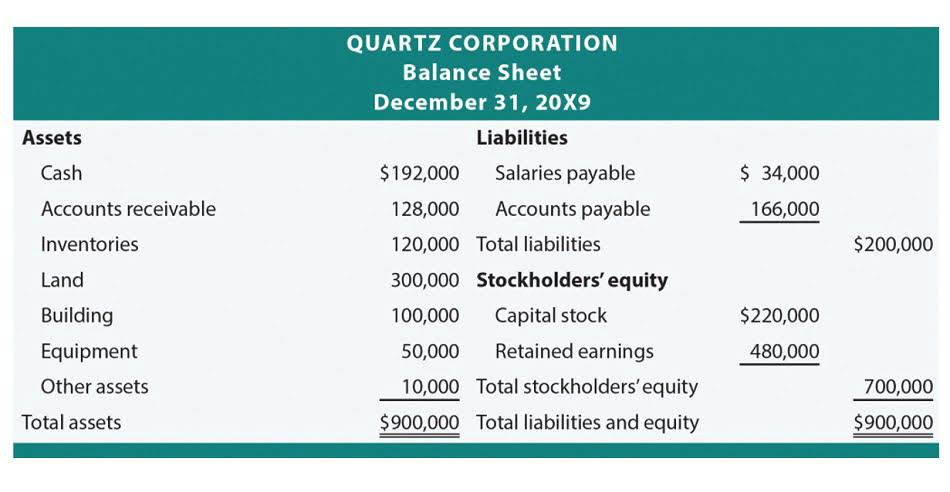
If you want to avoid a million-dollar whammy and not leave millions on the table when selling, read on. Net working capital is a collection of your currently available assets, as well as your short-term debts and liabilities. Since neither of these has an effect on your net annual income, it is not taxable. That being said, certain individual elements that make up your working capital might be what is the change in net working capital taxable separately. Before you even start to calculate your NWC, you should list all your assets and liabilities. In general, long-term debts do not constitute liabilities that affect net working capital.
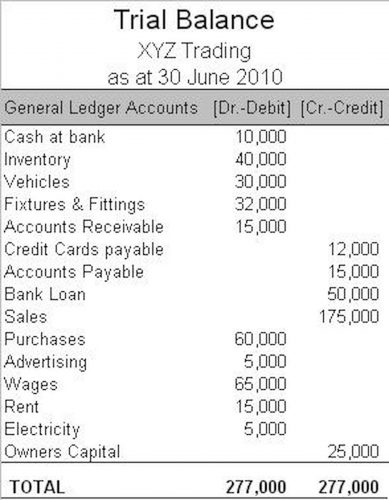
Example of Working Capital and Cash Flow
Comparing the working capital of a company https://wiingy.com/assets/2022/09/09/warm-up-to-this-hvac-chart-of-accounts-guide/ against its competitors in the same industry can indicate its competitive position. If Company A has working capital of $40,000, while Companies B and C have $15,000 and $10,000, respectively, then Company A can spend more money to grow its business faster than its two competitors. This is an obvious step to change the Net Working Capital of your business. Accordingly, you need to increase your sales team and market your products using various channels.

Current assets are the assets that can be converted into cash within a short period of time, typically one year. Such assets include cash, short-term securities, accounts receivable, and stock. Second, your business’s liquidity position improves and the business risk reduces if you hold large amounts of current assets. However, such a scenario reduces the overall profitability of your business. Therefore, a risk-return tradeoff is involved in managing the current assets of your business.